Field report: modular datacentre prototype
Design, assembly and commissioning of HAWD’s first prefabricated modular datacentre. The programme used leased manufacturing space in Essex to develop a self-contained demonstrator for evaluation at the company’s London offices.
Programme record
| PROJECT | Modular datacentre / first company-built prototype |
|---|---|
| BUILD PERIOD | January–September 2023 |
| ASSEMBLY SITE | Leased warehouse / Essex |
| APPARATUS | Approximately 10 metres tall / equipment enclosed in a serviced pod |
| COMPUTE PLATFORM | Xeon board assemblies / GPU compute hardware |
| CONNECTIVITY | Wireless / two 100G Ethernet ports behind a sliding cover |
| COOLING | Refrigerant chiller / secondary liquid circuit / shell heat rejection |
| INTENDED DESTINATION | HAWD London offices / demonstration and commercial evaluation |
January — Premises and enclosure
The project was approved as a proof of concept for a repeatable, enclosed datacentre product. It was the first installation of this type designed and built by HAWD. The commercial assessment anticipated substantial returns if a working demonstrator could be completed within the available capital allowance.
A commercial letting agent provided the warehouse facility in Essex. Its freehold was owned by a specialist manufacturing company.
A prefabricated serviced pod had been abandoned by the manufacturer in the warehouse before it was let to HAWD. Its dimensions appeared suitable for the proposed equipment, and using it avoided the cost and lead time of a new enclosure. Detachable panels found with the pod were glued into position to complete the required external profile. The finished apparatus stood approximately ten metres tall.
The design adopted the available enclosure as its starting point. Internal support positions, access restrictions and the existing shell dictated the eventual equipment layout. The project file recorded the pod as material available at the assembly site; a separate purchase invoice was not obtained.
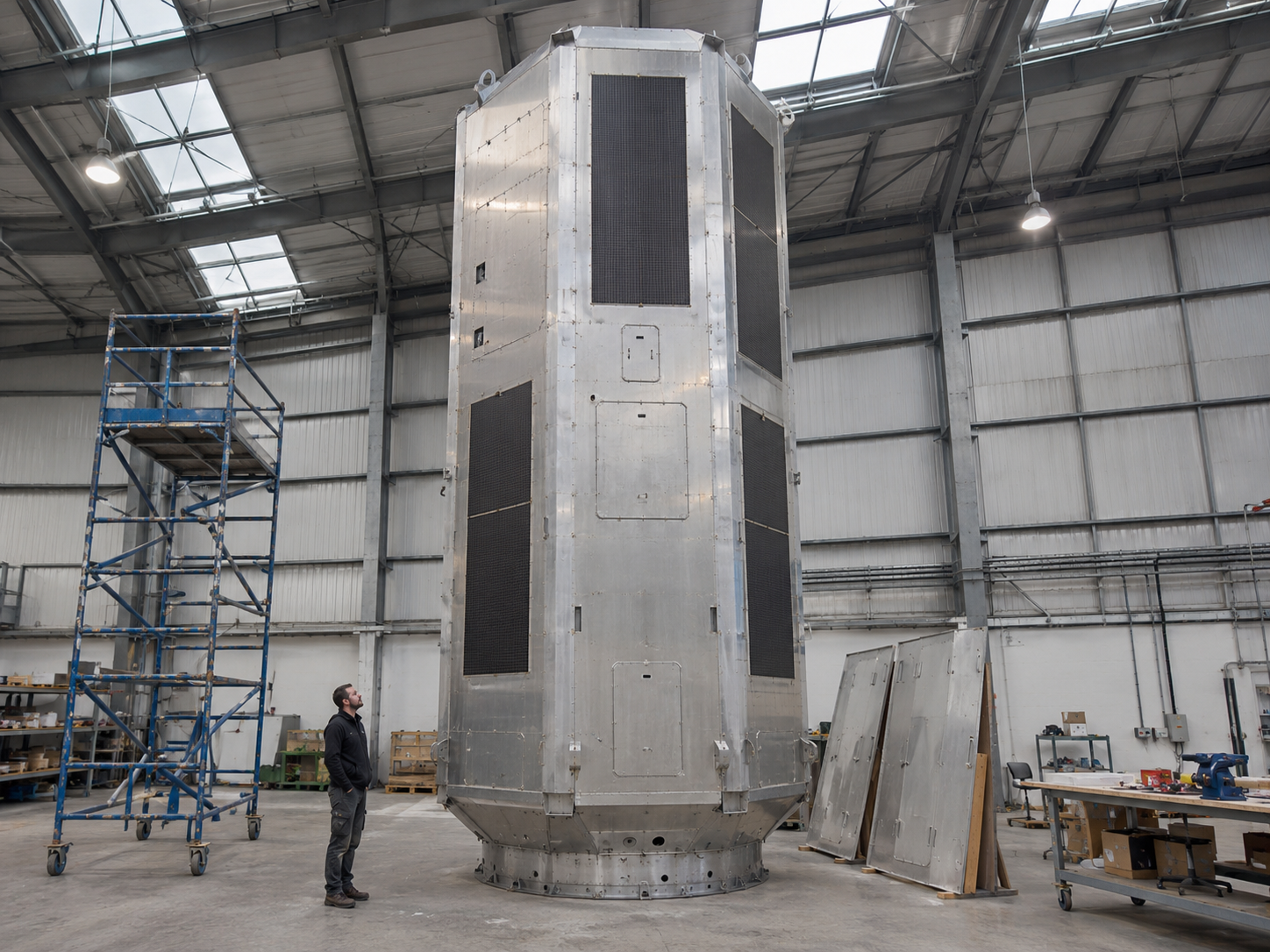
Serviced enclosure at the Essex assembly site before equipment integration.
February–April — Hardware procurement
Most of the equipment was sourced through disposal auctions. Purchases were assessed against price, condition and whether they could be accommodated within the pod. Complete matched systems were not available within budget, so the production design developed around the components acquired.
Relatively recent GPU hardware was selected for integration with board assemblies described in the procurement records as ninth-generation Xeon equipment. Storage, power-conversion equipment and auxiliary controllers came from several separate auction lots.
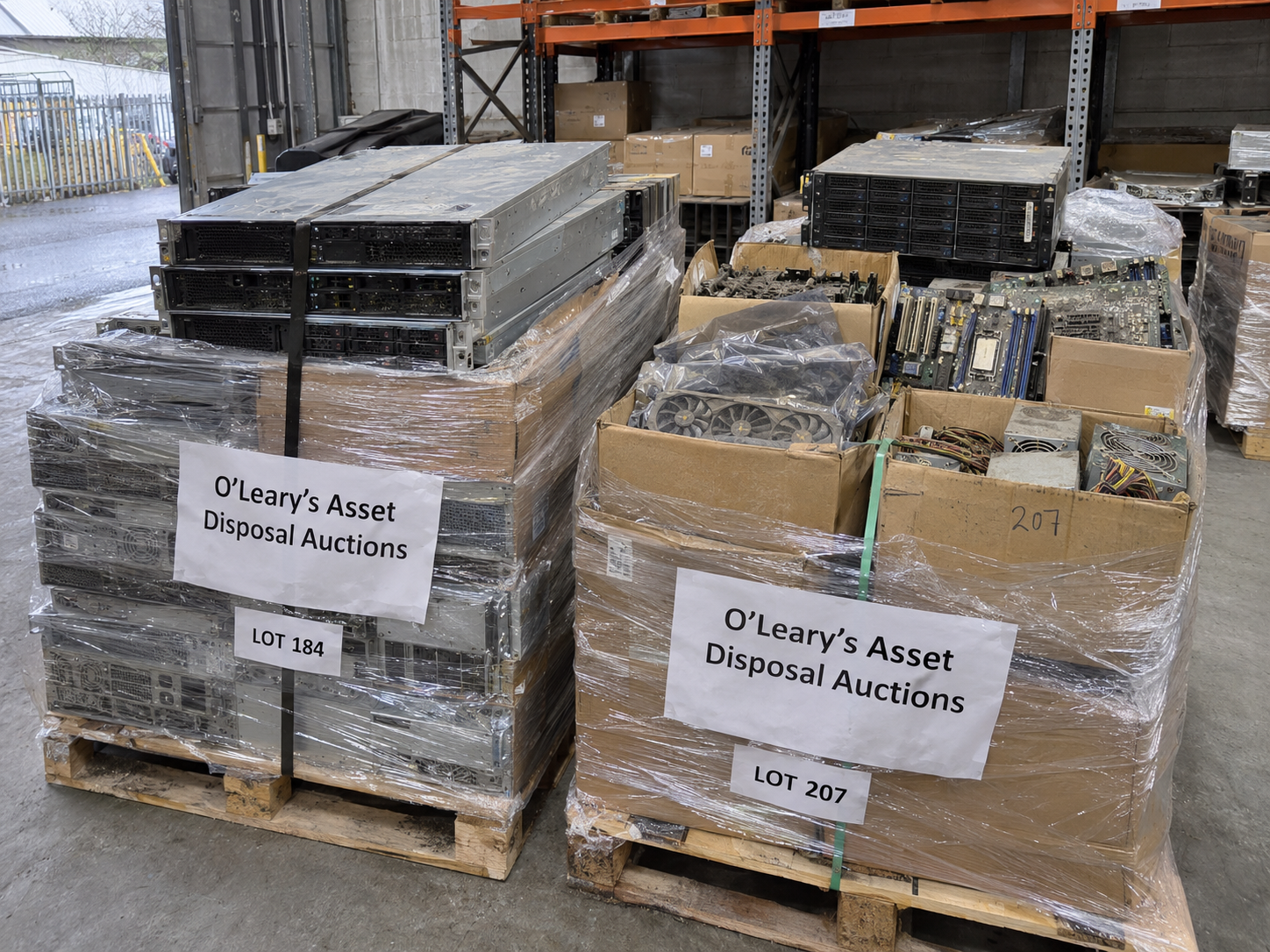
Mixed compute equipment received from O’Leary’s Asset Disposal Auctions.
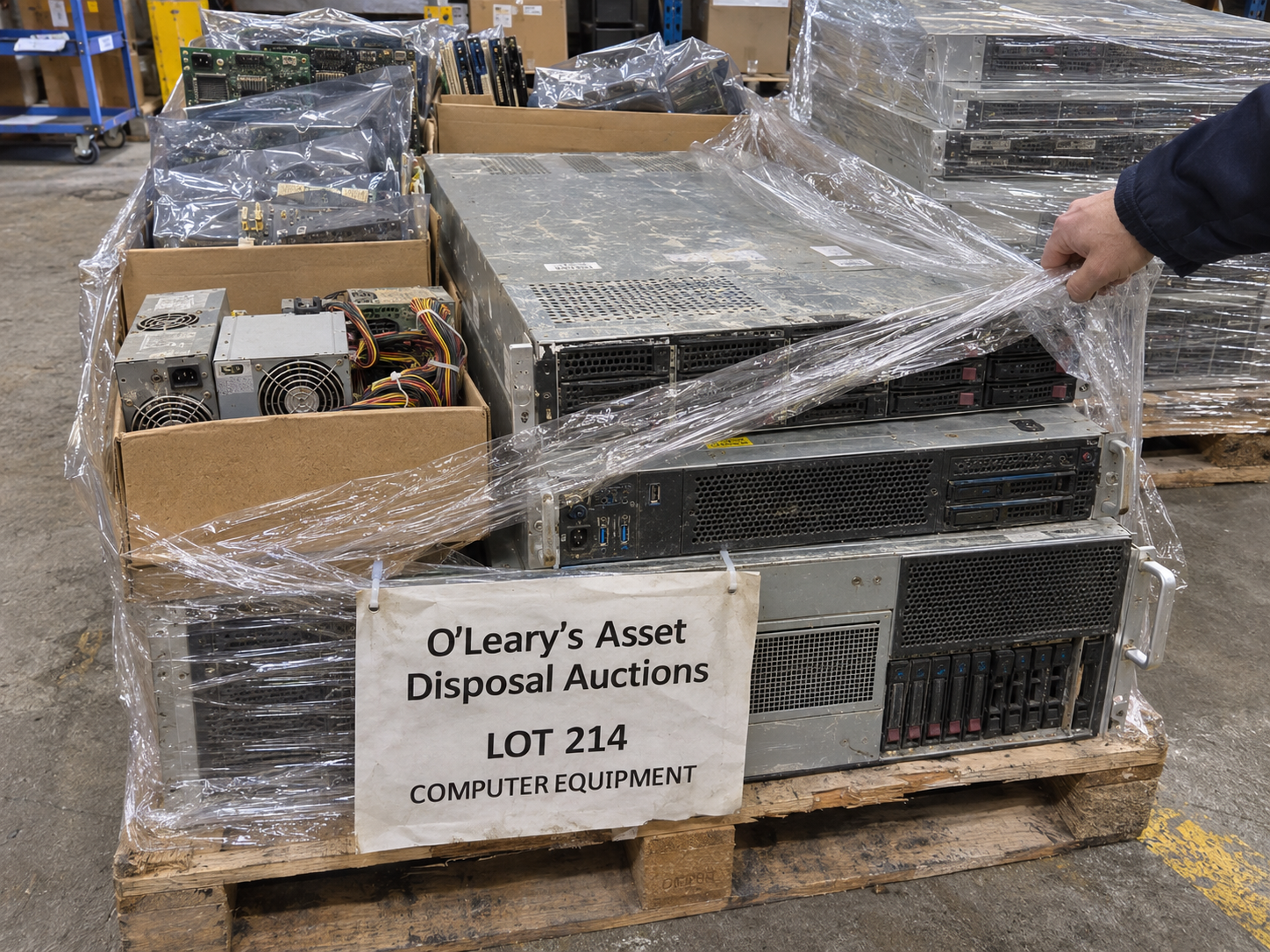
Lot 214 during unpacking and component allocation.
Two substantial mechanical and electrical items were made in house: the wiring loom and the unusually shaped rack frames. The frames followed the internal contours of the pod and allowed equipment to occupy spaces which would not accept conventional cabinets. Harness lengths and connector positions were determined after the equipment locations had been established.
The cooling system was purchased new from a Chinese partner. A compact refrigerant chiller was delivered in a single pallet crate, with two cartons of heat sinks, insulated pipework and circulation parts. The compressor, evaporator and controls formed a packaged unit larger than a server cooling assembly but small enough to install within the pod. This was the principal new equipment package in the build. Purchasing a new enclosure and new compute equipment as well would have exceeded the proof-of-concept budget.
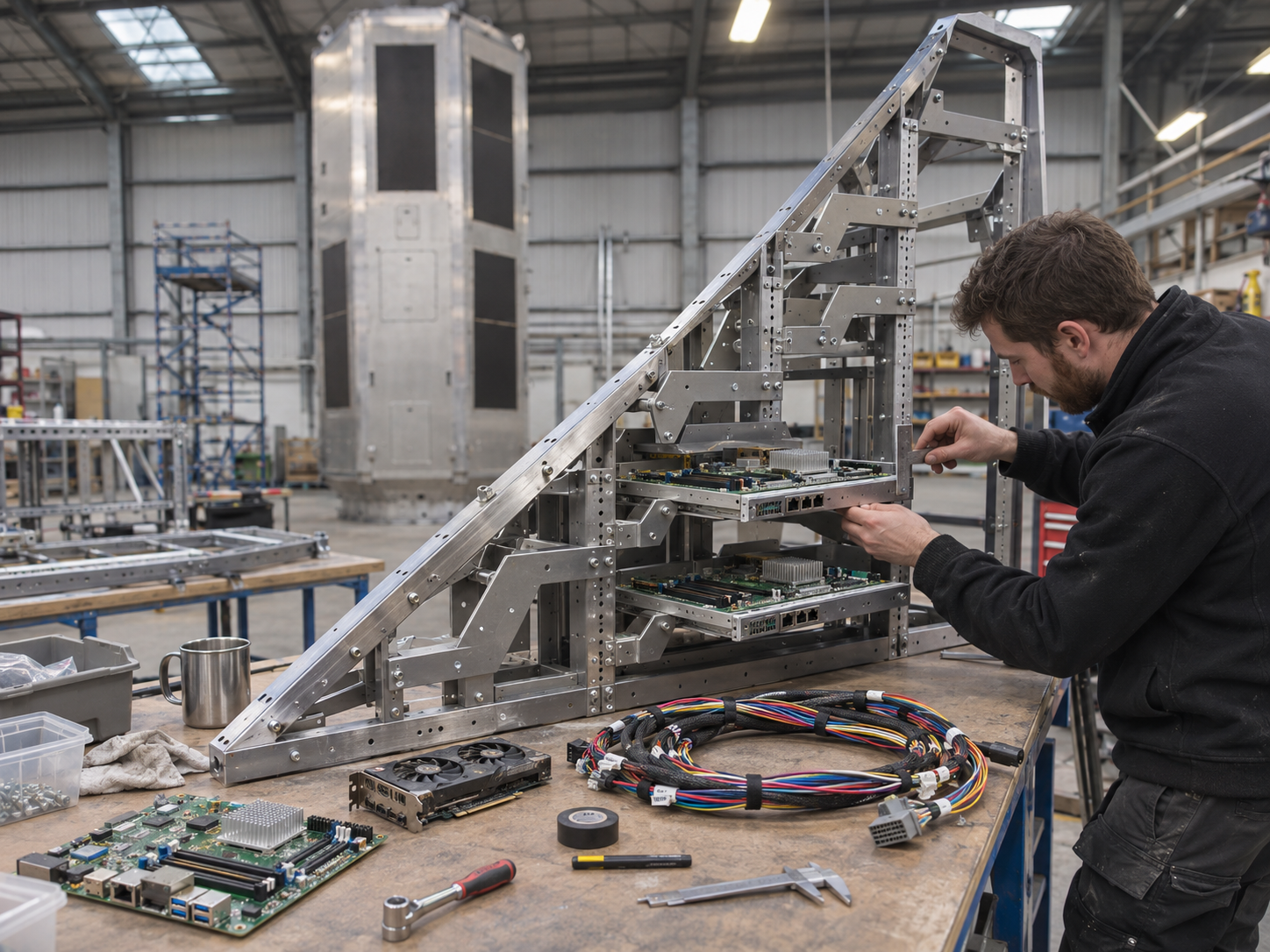
Non-standard board supports and the associated wiring loom were manufactured in house.

Packaged refrigerant chiller in its shipping crate, with heat sinks, insulated pipework and circulation parts.
May–August — Integration
The boards and GPU assemblies were installed over several months as the supporting frames and harness sections became available. Equipment substitutions required local changes to mounting positions and cable routing. These changes were incorporated into the build record rather than treated as revisions to a standard product, since no previous unit existed.
The chiller’s refrigerant circuit cooled a secondary liquid loop serving the compute assemblies. Its heat-rejection assembly was adapted to the surfaces integrated flush with the outer shell. The finished unit did not use conventional external radiator cabinets. The available shell area and the cooling package therefore formed part of the same thermal design.
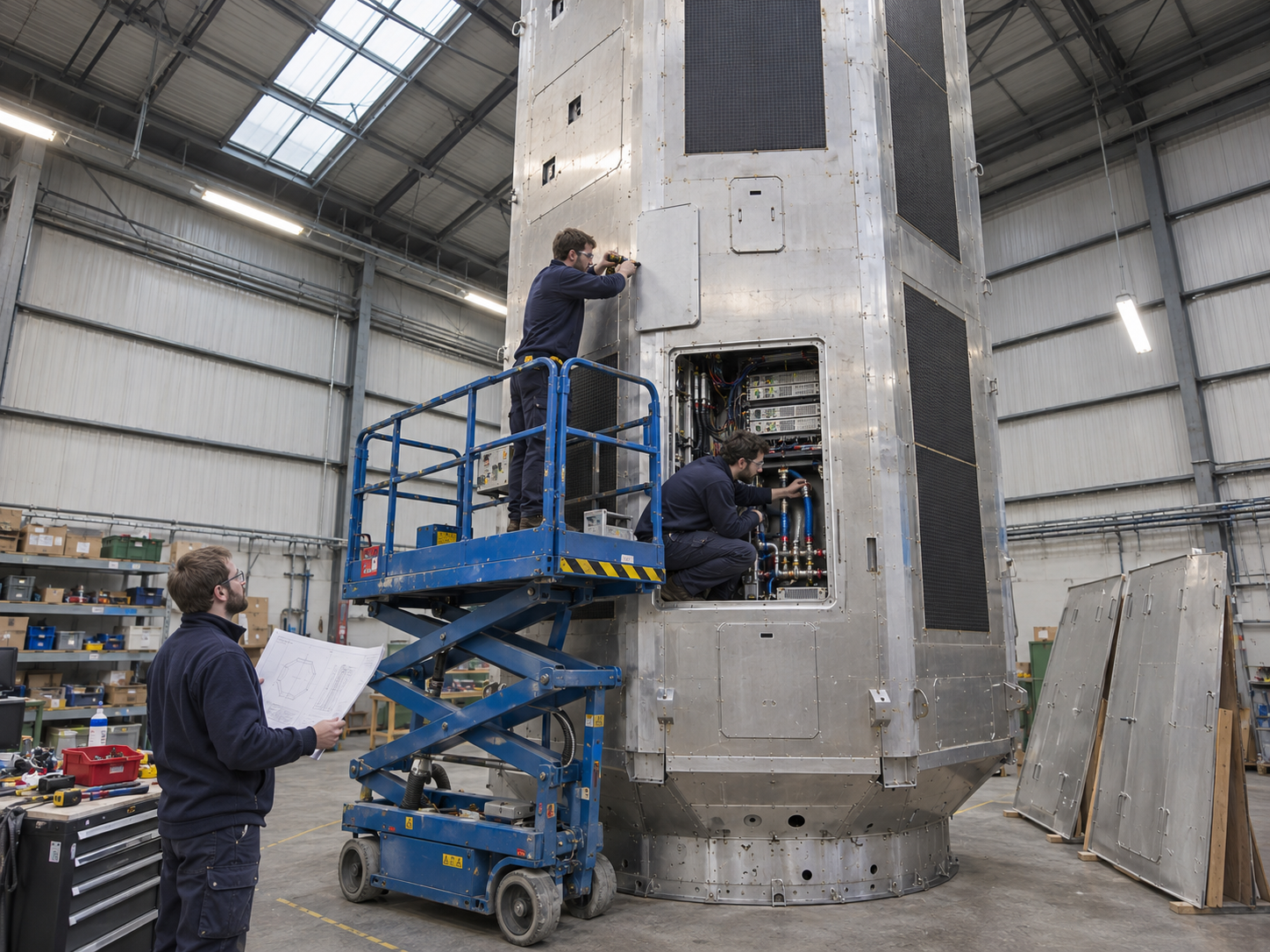
Access-panel work and liquid-circuit installation during the integration programme.
All operational apparatus was enclosed within the dedicated pod. The system provided wireless connectivity and two 100G Ethernet ports concealed behind a sliding mechanism in the shell. With the port cover closed, only the power connection used for maintenance and bench operation remained exposed. The final demonstration was to use a preloaded workload and the internal supervisory system.
Component reuse remained necessary through the final integration period. The warehouse CCTV recorder, its storage and part of its power equipment were removed for incorporation into the build. This provided the remaining components without a further order and allowed the planned test window to be retained. The warehouse recording system was not restored afterwards.
04–15 September — Site testing
The completed unit underwent two weeks of testing at the warehouse. The programme covered startup, hardware discovery, wireless connectivity, both 100G Ethernet ports, sustained compute loads, cooling circulation, temperature reporting and controlled shutdown. Faults found during the first week were addressed through connection changes and replacement of individual auction-sourced components.
The final test runs completed without a condition requiring the demonstrator to be withheld. Recorded temperatures remained within the project’s acceptance limits, and the supervisory system reported the expected devices. The results were approved as sufficient for a proof-of-concept presentation, with longer endurance testing to follow at the London site.
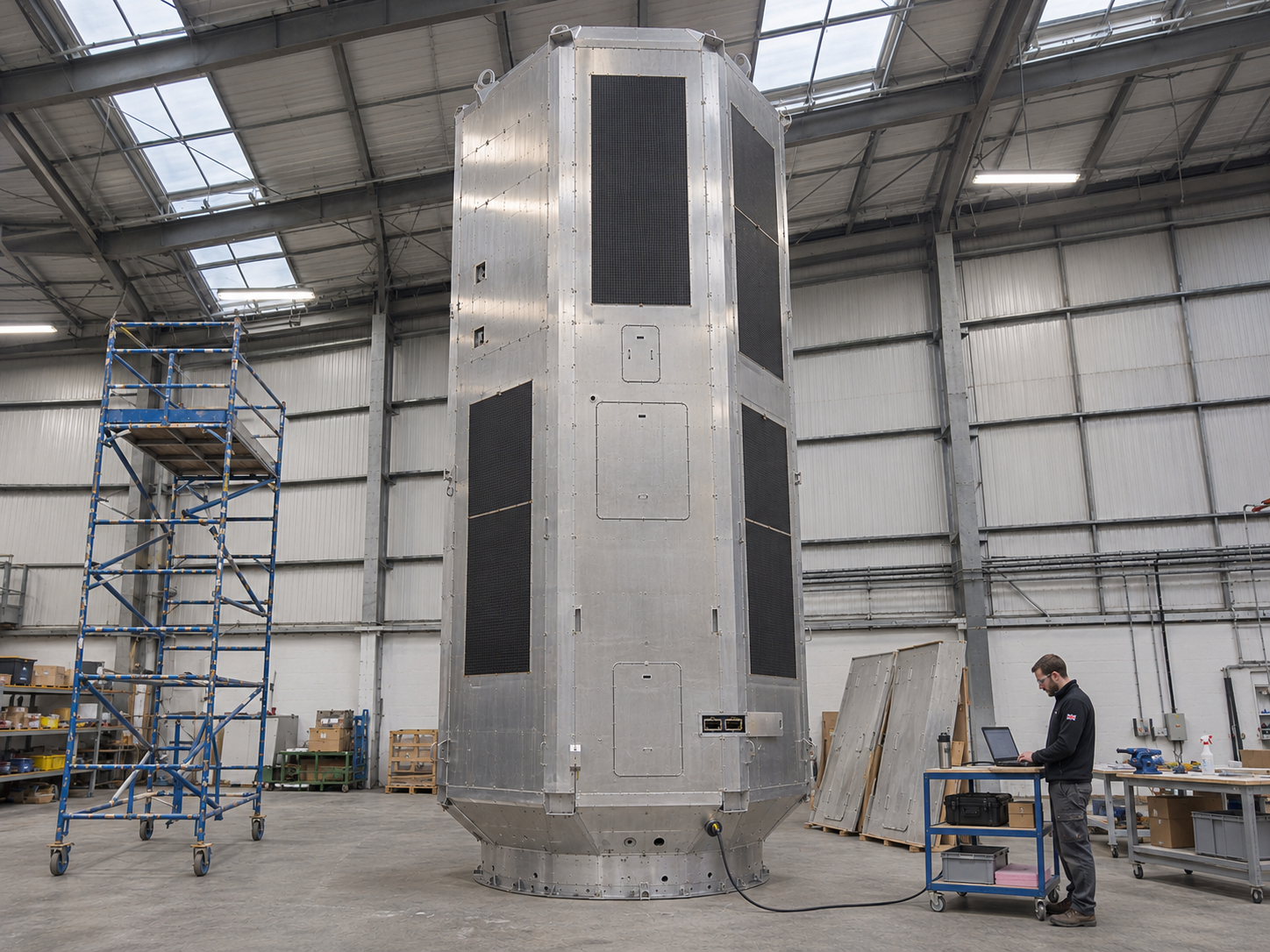
Completed demonstrator following the final site test. The sliding port cover is open for inspection.
The company arranged a formal power-on ceremony at its offices for 21 September. Local industry representatives were invited to attend a demonstration and discuss potential applications. The event materials described a working HAWD design and the opportunity to develop a commercial product from it.
18 September — Preparation for transport
Following the final inspection, the pod was closed, wrapped and placed horizontally in its transport cradle. The equipment remained installed. Collection by HAWD’s appointed logistics team was booked for the following morning, with delivery to London ahead of the ceremony.
The packed unit was left overnight in the warehouse collection area. The site was locked and the engineer responsible for handover retained the consignment paperwork. No overnight attendance was arranged.
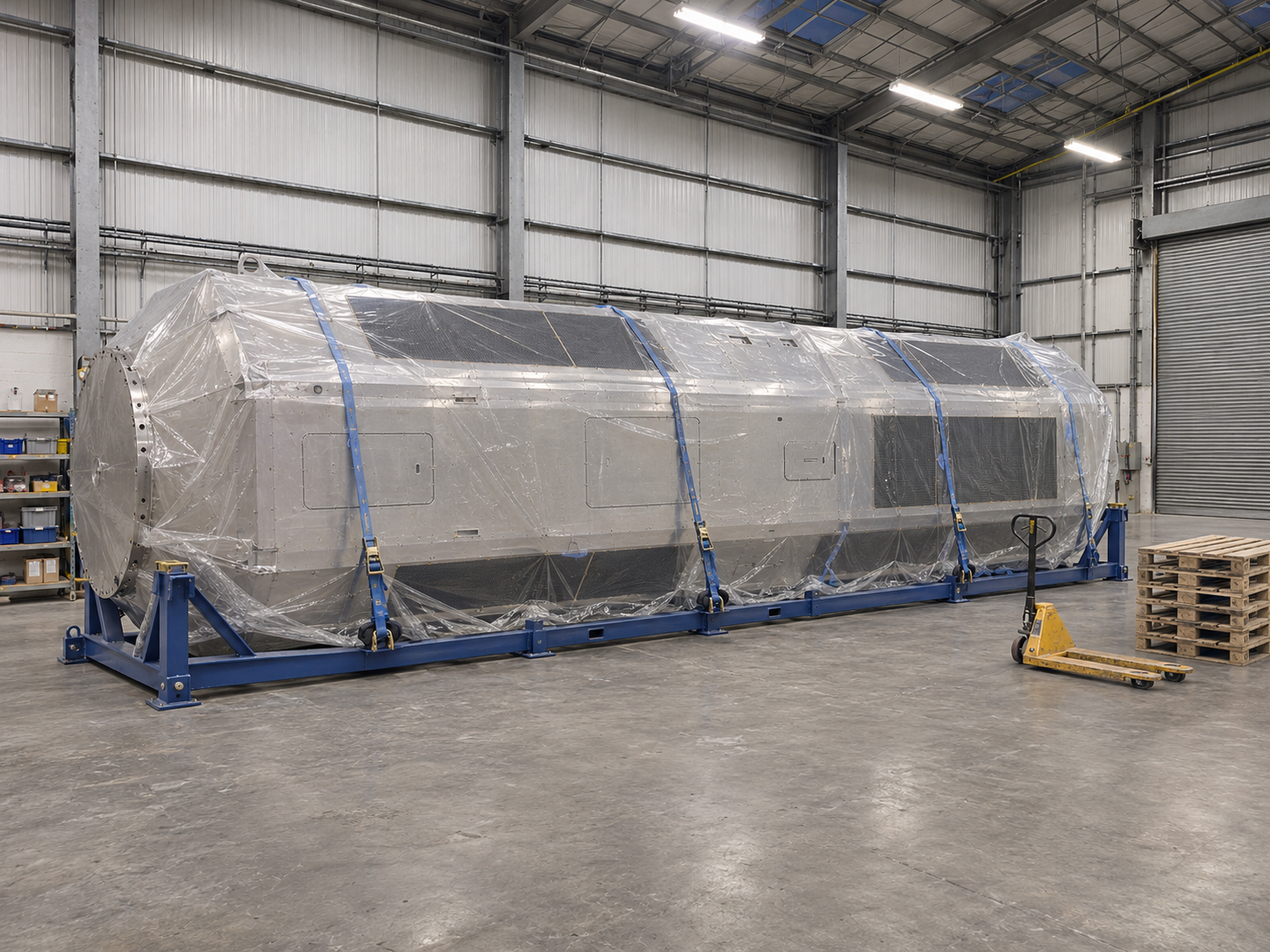
The closed unit, wrapped and secured horizontally in its transport cradle.
19 September, 08:16 — Unit absent
The logistics team arrived and found that the packed datacentre was no longer in the collection area. The warehouse was checked for an alternative loading position, and calls were made to the build team, the London office and the transport coordinator. None had authorised an earlier HAWD collection.
The absence of the complete apparatus was treated as a suspected organised theft. Its size and the equipment needed to move it suggested a planned operation rather than removal by an individual. Police were called to attend, and the available consignment and equipment records were supplied.
When officers requested the warehouse CCTV recordings, HAWD advised that the system had failed. The statement did not disclose that its recorder and associated components had been dismantled to complete the datacentre. Internal correspondence recorded concern that explaining this would reflect adversely on the project’s management. No usable warehouse footage was available.
19–20 September — Investigation arrangements
Police opened an investigation into the missing unit. HAWD provided photographs, approximate dimensions and the intended collection details. The ceremony was cancelled, and invitees were advised that the demonstrator was unavailable following an incident during the transfer arrangements.
HAWD separately retained a private investigator to trace movements of suitable heavy transport vehicles in the area. The investigator received the same external photographs and an outline of the collection window. The company continued to work on the assumption that the unit had been taken for its equipment or resale value.
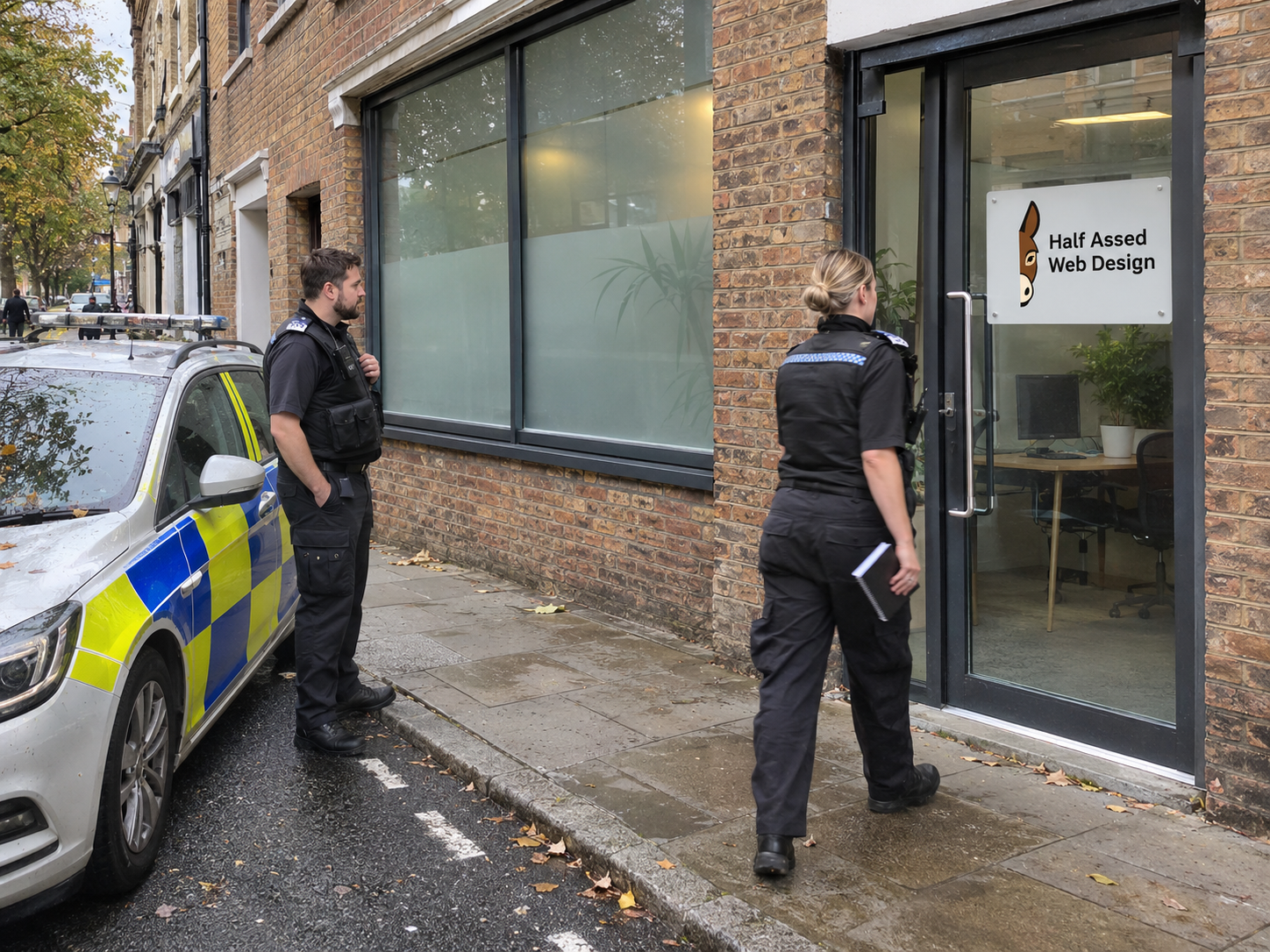
Officers attending the London office to obtain project and consignment records.
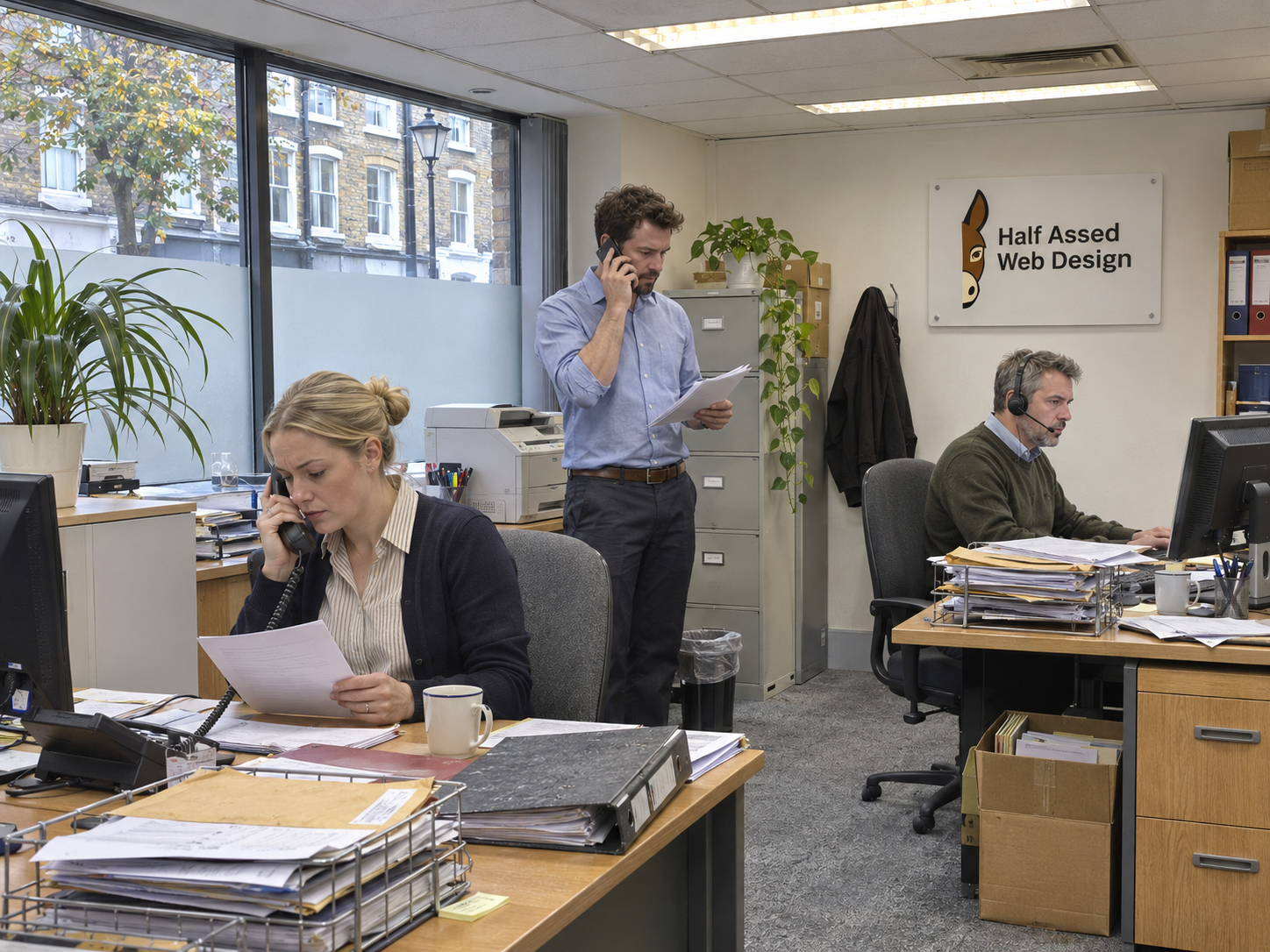
Office staff checking the collection booking and contacting the project’s suppliers.
26 September — Roadside footage
Approximately one week after the disappearance, CID located CCTV footage from a nearby road showing an articulated lorry carrying an object consistent with the missing unit. The wrapped dimensions, cradle and visible parts of the shell corresponded with HAWD’s photographs.
The footage established a departure route and a vehicle registration. It did not establish who had ordered the movement or the final destination. HAWD supplied the additional identifying features requested by the investigators and passed the transport details to its private investigator.
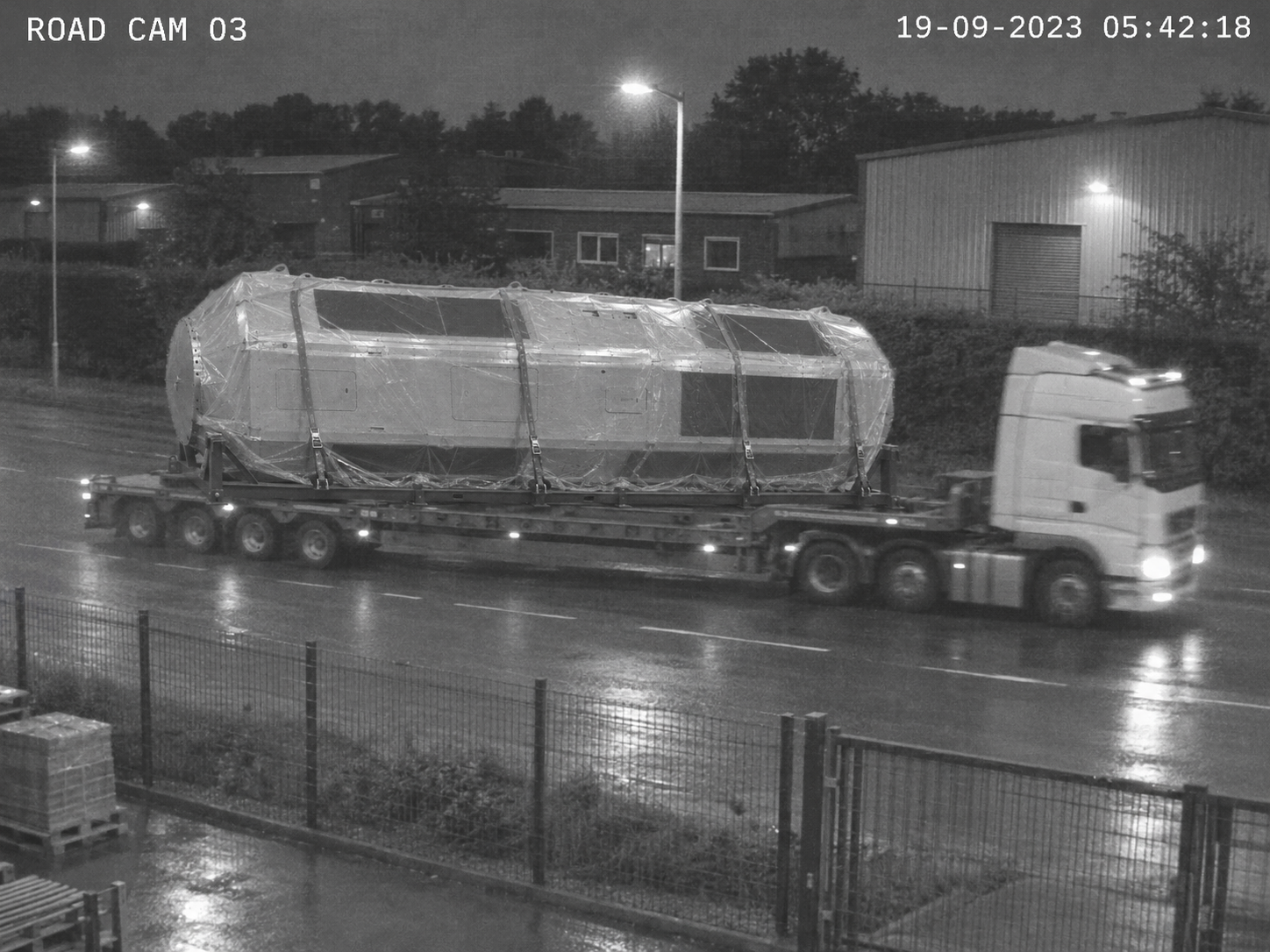
Roadside footage obtained by CID on 26 September. The shell and transport cradle are visible.
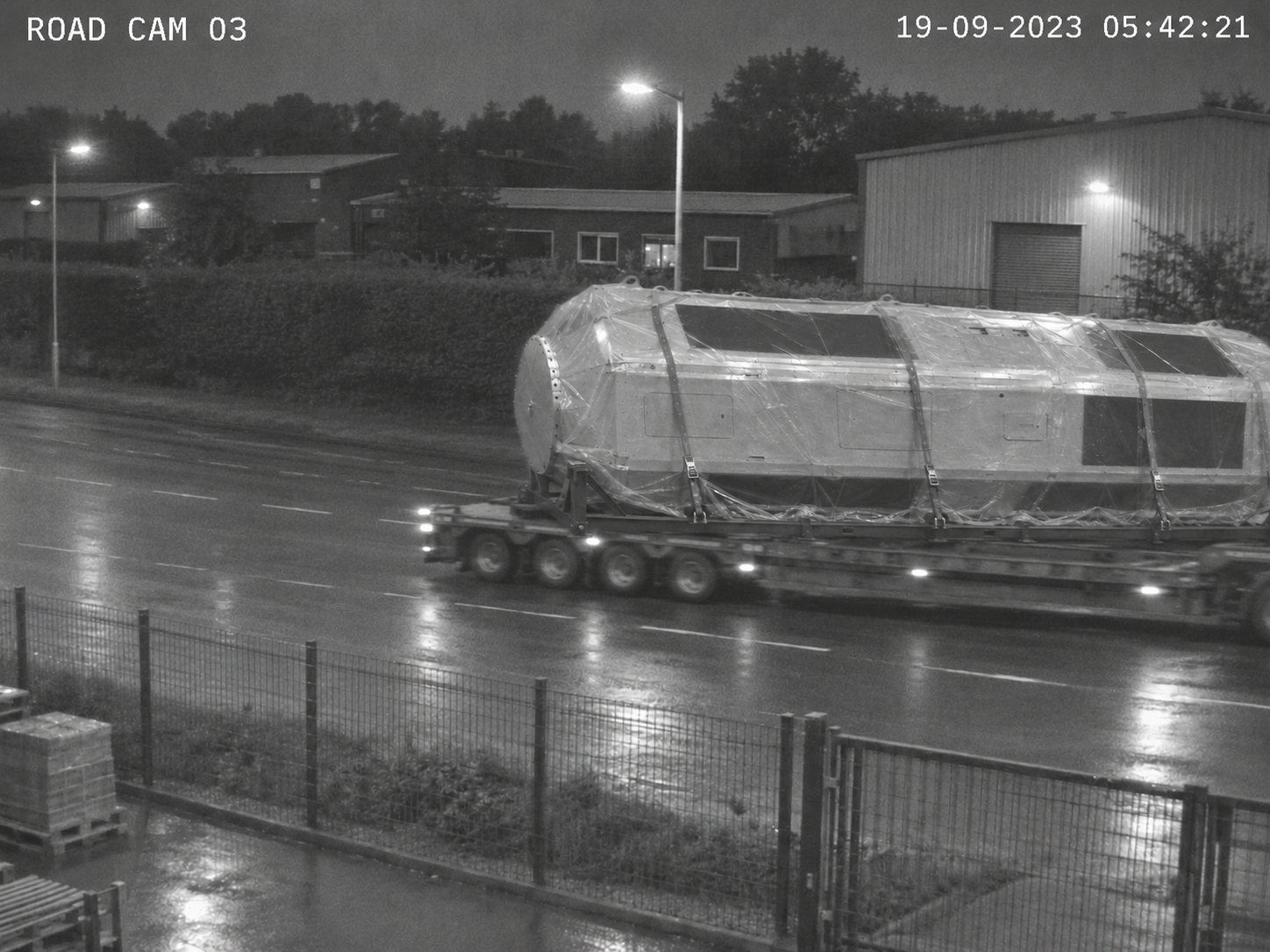
The same vehicle continuing out of the camera’s field of view.
03 October — Driver located
Two weeks after the collection failure, the private investigator located the driver and spoke with him at a truck stop. The driver recognised the load but declined to discuss the contract, delivery arrangements or customer instructions with anyone other than his employer.
He did identify the company for which the collection had been undertaken. The name matched the specialist manufacturer from which HAWD had leased the Essex warehouse. The driver described the movement as a booked collection with the paperwork and access arrangements supplied through his normal employer.
The investigator relayed the name to HAWD. The company contacted the manufacturer directly using the landlord details in the lease file, rather than continuing through the estate agent.
03 October — Manufacturer contacted
The initial call produced several transfers, urgent requests for the consignment reference and an extended exchange between staff at the manufacturer. Once the warehouse location and photographs had been compared with its own records, the manufacturer began cooperating with HAWD’s enquiries.
It advised that it had paid for the transfer and launch of a newly manufactured unit from the warehouse immediately next door to HAWD’s rented premises. Collection had been assigned to a separate logistics company, and the manufacturer had not attended to inspect the consignment before removal. Its internal tracking showed the collection and onward transfer as complete.
HAWD requested clarification of the term “launch”. The manufacturer then explained that it produced satellites. Its company name did not identify that activity, and none of the staff handling the lease through the estate agent had discussed it with HAWD. The build team had understood the landlord only to be a specialist manufacturer with warehouse space available.
Both neighbouring warehouses displayed the same unit number. The collection instructions identified that number without a site plan or another means of distinguishing the two buildings. The logistics contractor had entered HAWD’s warehouse and collected the packed datacentre under the consignment reference intended for the unit next door.
The manufacturer confirmed that it had abandoned the shell used by HAWD when it vacated the rented warehouse. That shell happened to be identical to the one enclosing the completed satellite in the neighbouring building. The matching dimensions, external fittings and transport cradle had been accepted as sufficient identification during collection; the individual asset identity had not been checked.
A physical check of the neighbouring warehouse found the intended satellite still in its collection position. It had never left the site. The abandoned shell and the flight unit were separate objects, and HAWD had built its datacentre inside the former.

Adjacent collection entrances and the unit-number sign between them.
03 October — Launch provider contacted
The manufacturer contacted its Indian launch provider while remaining on the telephone with HAWD. The call prompted a further sequence of urgent enquiries between the provider’s customer team, payload personnel and launch operations. The request was to stop processing the consignment until its identity and contents could be established.
The response from launch operations was that first-stage ignition had already occurred. By the time the discrepancy reached the responsible controller, the vehicle was in flight. The manufacturer’s booking had proceeded on the basis of the supplied payload documentation, which described the satellite still in Essex rather than the datacentre collected from the neighbouring warehouse.
The provider made a live launch feed and telemetry display available to the manufacturer and HAWD. Staff who had been trying to establish the warehouse collection destination were able to follow the object’s ascent. The identical shell and matching interfaces had allowed the wrong apparatus to pass through the contracted handling process without its identity or internal configuration being reconciled with the manifest.
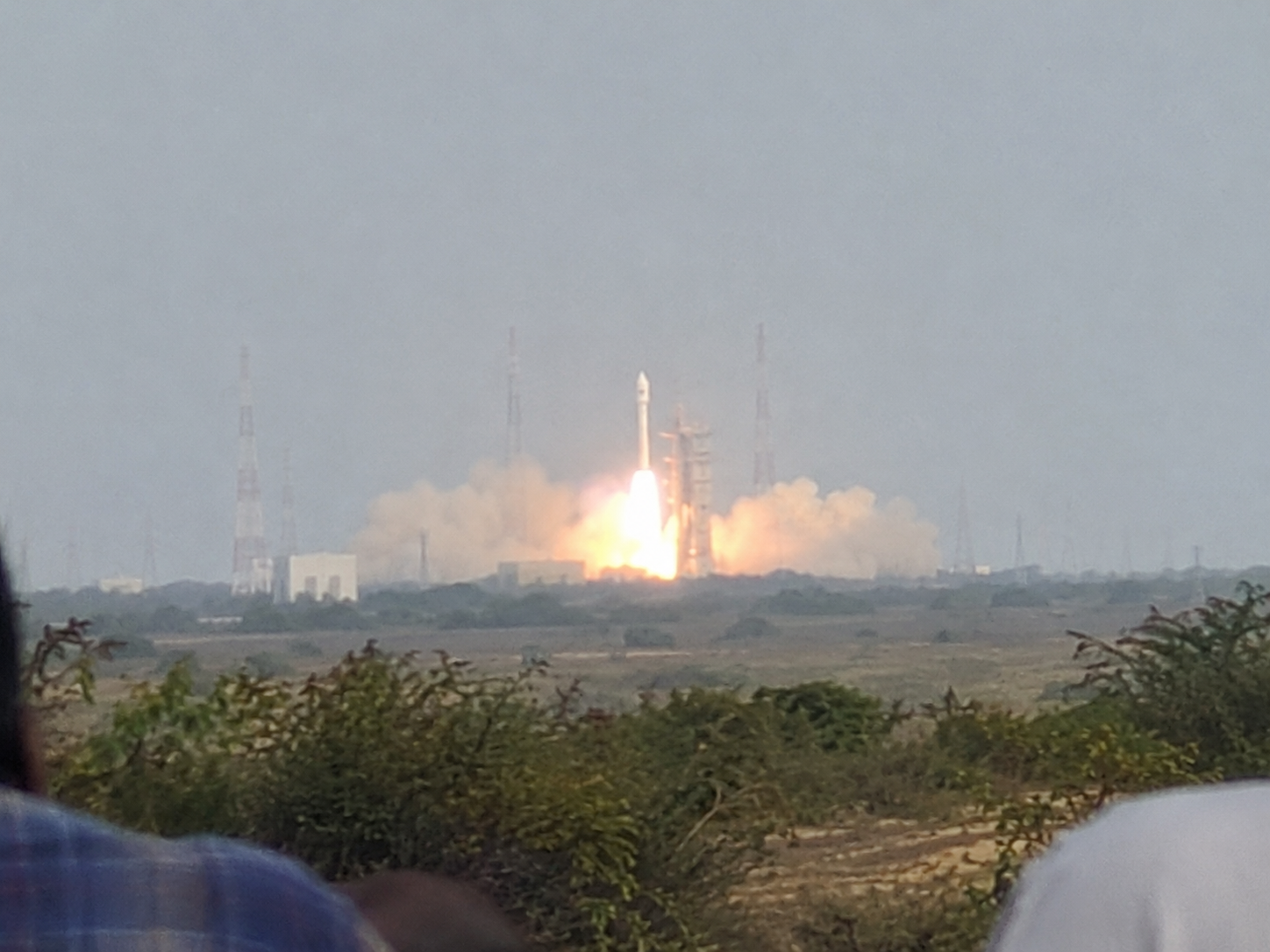
Amateur phone image of first-stage ignition, added to the incident file.
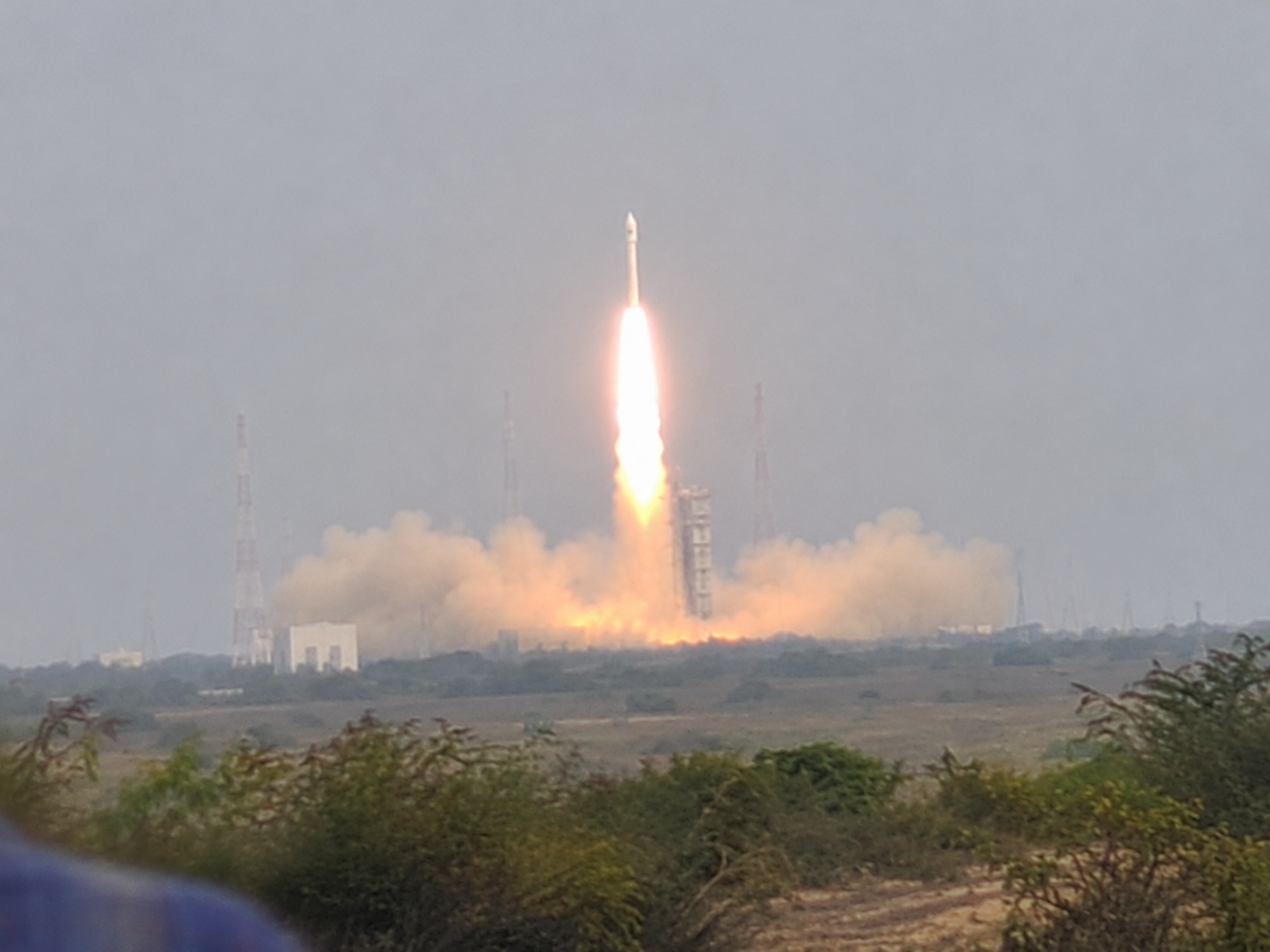
A subsequent frame from the same observation position.
03 October — Flight assessment
The vehicle reached low orbit, but the upper stage did not achieve the planned insertion conditions. The launch provider reported that the payload’s actual mass, weight distribution and gyroscopic behaviour differed from the values used in the flight model. The resulting attitude response and correction demands had taken the upper stage off its planned track.
HAWD’s shell contained compute assemblies, custom rack frames, power equipment and a liquid circuit rather than the flight hardware installed in the intended satellite. The provider’s assessment linked these differences to the unexpected behaviour. The achieved orbit was unstable, with a substantially lower altitude at its lowest point than the mission plan required.
The mission controller decided not to separate the payload. The upper stage remained coupled so that its available attitude control and remaining manoeuvring capability could be used to assist deorbit. HAWD was advised that the objective was now management of the combined object’s descent.
No command path to the datacentre’s internal supervisory system had been provided as part of the launch interface. The local wireless connection was out of range, and the Ethernet ports were not connected to the launch vehicle’s command system. HAWD therefore had no means of querying the compute equipment or changing its state. The information available to the company came from the launch provider’s tracking and upper-stage telemetry.
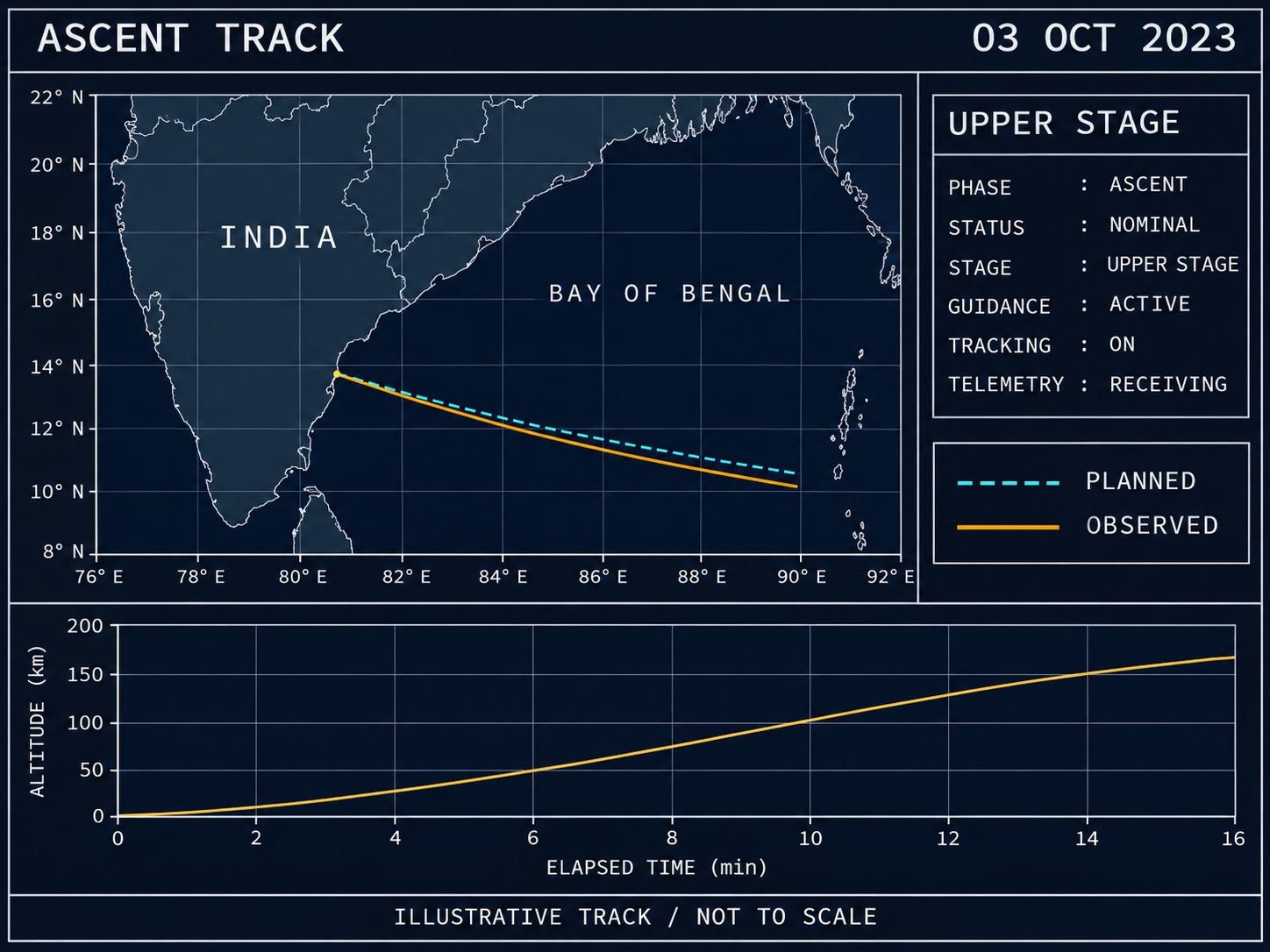
Summary of the planned and observed tracks supplied during the flight assessment.
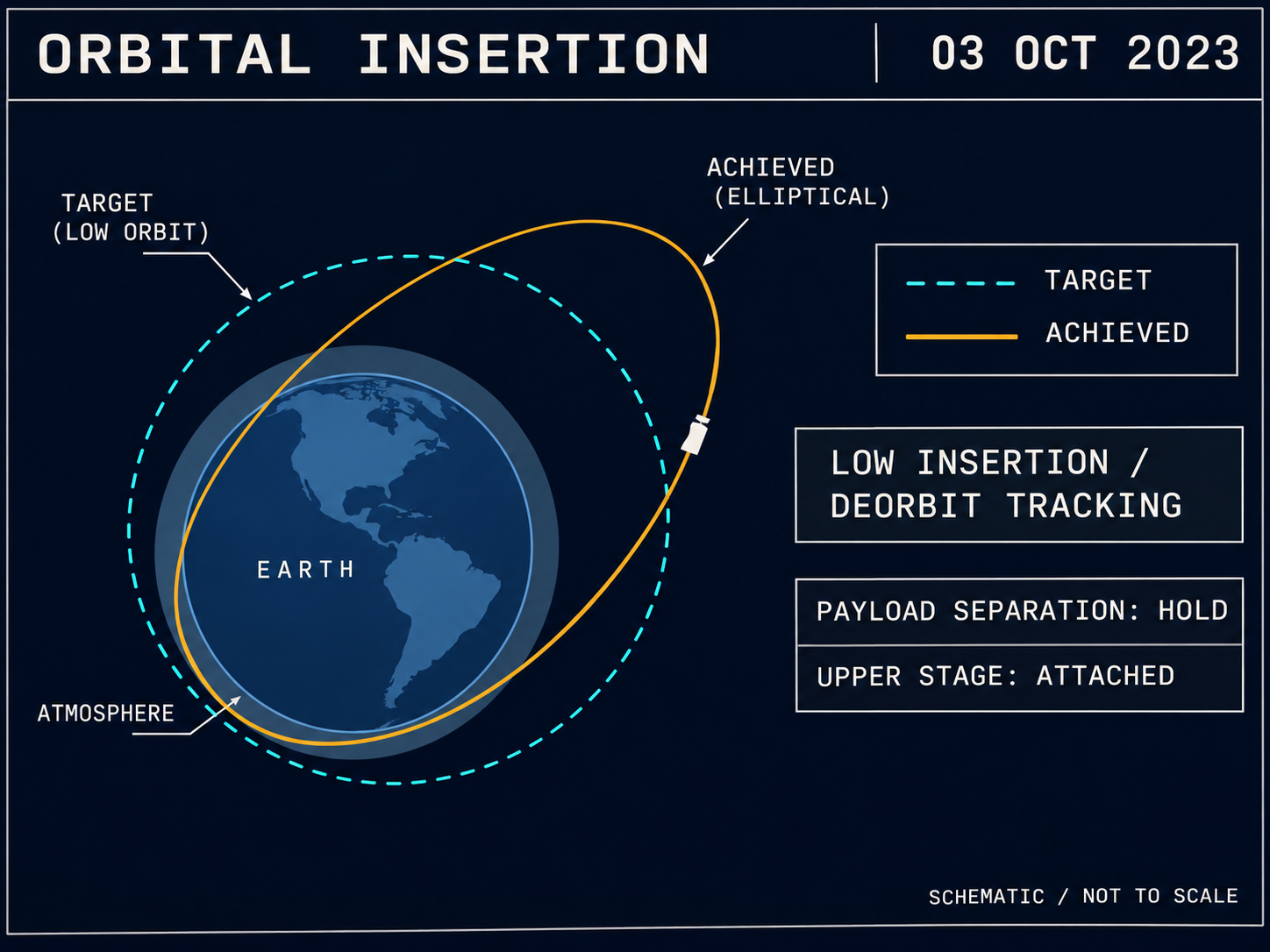
Schematic of the achieved trajectory. Payload separation remained on hold and the upper stage stayed attached.
03 October — Tracking and re-entry
HAWD followed the object for several hours through the provider’s telemetry system. Successive updates revised the predicted descent time and ground track. The coupled assembly remained under observation as its orbit decayed.
The object entered the atmosphere over the Pacific. The provider’s final tracking report recorded re-entry and destruction of the payload during atmospheric passage. No recoverable datacentre assembly was identified, and no hardware was returned to HAWD.
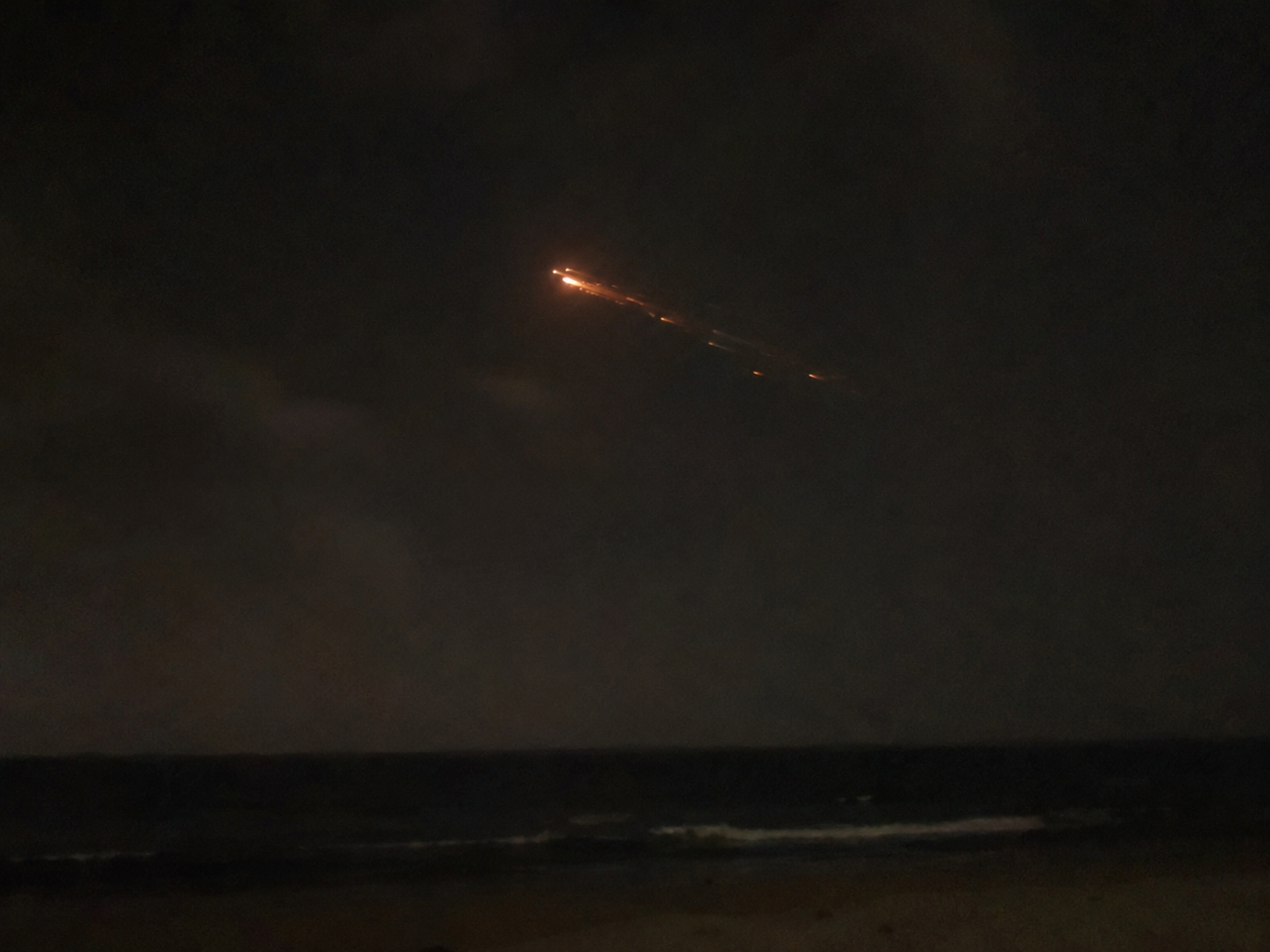
Distant phone image of the atmospheric passage over the Pacific.
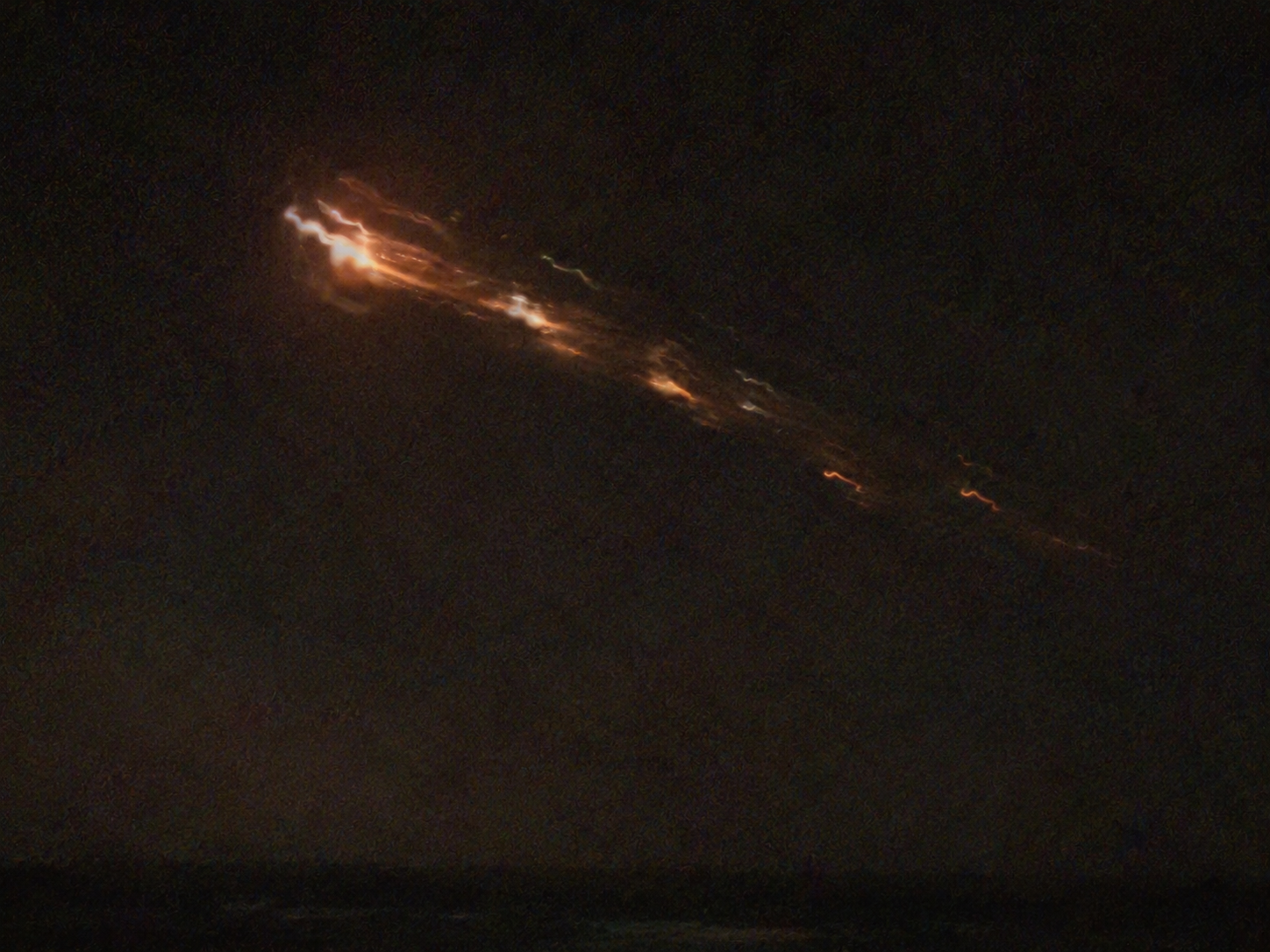
A later, digitally enlarged frame. Camera movement limits identification of individual fragments.
The police and the private investigator were informed of the confirmed transport and launch sequence. The missing-property file was updated with the manufacturer’s consignment records and the launch provider’s incident references. The investigation had established the unit’s destination but had not produced an asset capable of return.
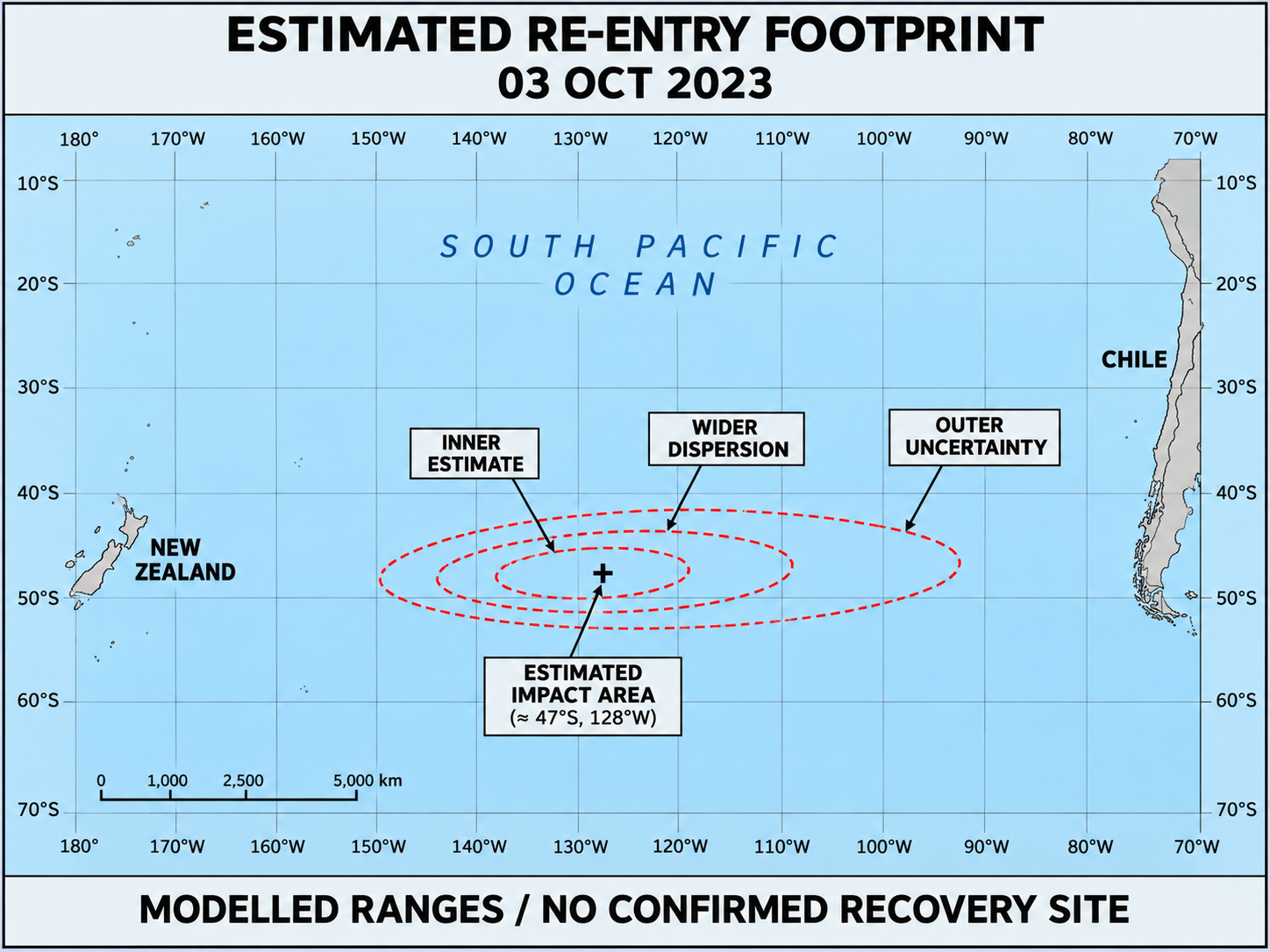
Estimated impact area and debris-distribution ranges. The boundaries indicate uncertainty; no recovery site was confirmed.
06 October — Project closure and insurance notification
HAWD cancelled the modular datacentre programme. The remaining budget did not support construction of another demonstrator, and the commercial discussions planned around the London ceremony had not proceeded. The site test results were retained, but there was no longer a physical unit available for inspection or further evaluation.
The insurance notification described the cause of loss as collection from the wrong warehouse, transfer to a launch facility, launch into space and destruction on re-entry. It identified the duplicate unit numbering and identical shells as the circumstances of the collection error. HAWD submitted the build inventory, the intended London transport booking, police reference, investigator’s report and the telemetry records supplied through the manufacturer.
The insurer requested confirmation that this wording described the actual sequence of events. HAWD confirmed that it did and supplied a chronology identifying the parties responsible for each movement.
October–December — Loss-adjustment process
The insurer appointed a team of loss adjusters to establish how the insured apparatus had entered the manufacturer’s launch consignment. They attended the Essex warehouse, interviewed the project staff and requested the lease, inventory, build photographs, purchase records, test results and all available collection instructions.
The enquiry required confirmation that the manufacturer had abandoned the spare shell before letting the premises, together with records distinguishing it from the completed satellite next door. The adjusters also requested photographs of both warehouse numbers, the collection instructions and an account of the checks used to identify the load. Responsibility for removing the datacentre and passing it between carriers remained under examination.
The absence of warehouse CCTV generated an additional request for maintenance and disposal records. The component allocation sheets showed that parts of the recording system had been transferred into the datacentre. The adjusters requested an explanation reconciling that record with the earlier description of a system failure supplied to the police.
Valuation was also referred for further review. Auction receipts supported the acquisition cost of much of the equipment, while HAWD’s claimed value included design work, fabrication, integration and testing. The enclosure had no corresponding purchase receipt, and the anticipated commercial return was supported by projections rather than completed orders.
Further questionnaires addressed transit cover, the storage period before collection, the involvement of contractors outside HAWD’s transport booking and the circumstances of the launch. Responses prompted additional requests for documents from the manufacturer and its carriers. The consignment records described movement of a satellite which remained in Essex, while the datacentre had travelled under those records without a separate asset check.
18 December — Recorded position
| BUILD RESULT | Prototype completed / two-week site test programme accepted |
|---|---|
| LONDON HANDOVER | Not completed / demonstration ceremony cancelled |
| COLLECTION | Wrong neighbouring warehouse / duplicate unit numbers / identical shells |
| FINAL DISPOSITION | Datacentre launched in place of the satellite / destroyed on re-entry |
| RECOVERY | No hardware returned |
| PROGRAMME STATUS | Cancelled / replacement prototype not funded |
| INSURANCE STATUS | Loss adjusters appointed / information requests continuing |
The modular datacentre had completed its onsite acceptance programme before the loss. It was collected in error from a warehouse bearing the same number as the intended collection building next door. Its abandoned enclosure matched the shell of the manufacturer’s satellite, which remained at the correct premises throughout. The error was identified only after the collected apparatus had reached the point at which the flight could no longer be stopped.
As at 18 December, the insurer had not issued a coverage decision or agreed a settlement. HAWD continued to answer requests concerning ownership, valuation, custody and the movement of the unit. The claim remained open across several organisations while the development project remained closed.
The first HAWD modular datacentre was accidentally launched into space and destroyed during re-entry over the Pacific. The development programme is cancelled. The insurance claim remains subject to loss-adjuster enquiries and supporting-document review; no settlement has been agreed.